Thursday, March 26, 2015

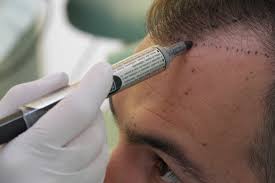
Understanding FUT Strip Technique Hair Transplantation


Understanding FUT Strip Technique Hair Transplantation

Author: Amelia Aitken
The FUT strip procedure derives from the old technique of strip harvesting, where a thin strip of skin is removed from the back of the scalp or permanent donor zone to yield the donor hair. Formerly, the strip procedure has been largely responsible for majorly unwanted results of hair plugs and donor scarring and bruising. However, with the new advancement of follicular grafting and micro dissection, things have changed for the strip procedure. It is now favored by many surgeons for yielding the greater number of even quality hair grafts in comparison to the FUE procedure; and achieve full head coverage under a 7hour session.
The FUT procedure shares only the approach of using skin dissection for yielding hair grafts, whereas, it differ in the following measures.
  • Use of local anaesthesia
Previously, the strip method was performed under general anaesthesia which raised the issues of blood loss during surgery; bruising; scarring. Often the scars would be bumpy. The use of local anaesthesia constricts the blood vessels of the treatable area and stiffens it resisting against excess blood loss. The incision of the donor strip can thus be fine and so would be the scar.
  • Use of single blade incision
The use of lateral slit incision with a single blade scalpel has replaced the multi-bladed incision type. The single blade scalpel reduces the chances of graft transaction in way of the strip removal. The multi-bladed incision was done with a specially designed instrument with a row of blades like in a razor that was implemented to reduce scarring. The multiple bladed incisions just didn't work as expected that now the single blade incision has succeeded to achieve.
  • Follicular Grafting
As we know it, hair grows out of a single follicle, but the hair placement in a scalp occurs in 2 to 5 hair follicles closely residing in the scalp as a group or unit undetectable with naked eye; these are referred as follicular units. It is extracting these follicular units with a little fatty tissue enwrapped around them that makes a complete hair graft.
The follicular grafting process is abided by both FUT and FUE hair transplant procedures. In FUT the strip of skin is placed under a microscope and with a fine needle is the folliclur grafts dissected from the skin. Whereas, in FUE the hair of the entire donor zone is close cropped and the follicular units are easily detected with 30x magnification.
  • Undermining
Undermining is a technique that is performed occasionally mainly to relive tension during closing and suturing the donor wound if the candidate's scalp is too tight, or there have been hair transplant surgeries done previously. It is done by separating the skin layers around the wound edges.
Usually surgeons avoid undermining, mainly because it has the potential risks of injuring nerves, bleeding, slow healing and scarring. But it is only made a part of the procedure of a predetermined and well planned surgery.
  • Trichophytic Closure
The trichophytic closure or "tricho" closure reduces the chances of scarring with some systematic and coordinated incision and closure patterns. The closure technique allows the existing hairs to grow through the linear scar hiding it at the most. Usually the tricho closure requires the donor area to be sutured than stapled.
  • Use of Absorbable Sutures and Staples
The closure of the donor wound can either be with staples or sutures. Both can reduce scarring. While staples are advantageous of being inert this causes lesser inflammation and resulting in lesser risk of damaging the existing hair at the back of the scalp after the donor harvesting. The staples also reduce the chance of strangling hair follicles with its interrupted clipping in contrast to an uninterrupted running stitch.
Absorbable sutures on the other hand abort the event of cutting the suture and disturb the operated areas anymore. Absorbable sutures allow the surgeon good precision of closing the donor wound manually.
Article Source: http://www.articlesbase.com/hair-articles/understanding-fut-strip-technique-hair-transplantation-7232394.html
About the Author
Harley Street Hair Transplant Clinic offers FUT hair transplant surgery performed under highly skilled specialists. We offer the best price packages and transparent deals, with FUT cost starting from £2, per graft. Talk to us or visit our website for more details.


key word :hair transplant london,hair clinic uk,fut

Post Pregnancy Liposuction


Post Pregnancy Liposuction

Author: kaushalkumar
Bringing a baby into the world is a time that is most special to the woman who gives birth. It is a time when her life gets transformed and she is able to experience the most unique emotions. Someone who has not given birth to a life, may never be able to understand the joy and excitement that the new life brings to the mother. Even after months of pain and suffering, the only joy that the mother lives of is to be able to see her baby being healthy. However, in the selfless process of giving birth, a lot of times the mother loses the ideal shape of her body. A lot of expectant mothers put on excessive fat during the months of pregnancy, either due to the natural response of the body to the pregnancy or the excessive eating of fattening foods. In some mothers the fat wear off after the pregnancy is complete, in others the fat remains and at times, makes a stubborn place in the body, making it difficult to fight the fat problem. With the hands full with a baby, a lot of mothers find it even more difficult to fight the post pregnancy fat. Some may find it impossible to find time to go to a gym regularly, others may simply not have the inclination after spending tiring hours of the day and night changing nappies of the baby and feeding it at odd hours. The best solution to the fat problem then remains, to find an instant way out.
Liposuction in India is one such procedure, which helps the new mothers to gain their body back and start living a normal life, which they may have been accustomed to, before getting pregnant. This is a simple surgical procedure which is carried out on a number of problem regions of the body which include the thighs, inner thighs, abdomen, love handles, buttocks, upper and lower back, arms, saddle bags etc. These are the areas that experience the most concentration of unwanted fat. The removal of fat through the liposculpture technique, makes it a highly demanded and trusted procedure around the country and more and more new moms are opting for this technique. Though having a baby is an out of the world experience, but having to lose the original body shape and consequently one's confidence are the downsides that one faces after a pregnancy. However if a medical procedure is able to help out women fighting post-pregnancy fat, it would add to the ecstasy of having become a parent. The joy of starting a family is an unbeatable feeling but to have to do it at the cost of the appearance of the body, deters a lot of young women from experiencing this unique joy of motherhood. When there is a solution to the problem and such a simple one, it is only obvious that more women would feel ready to become mothers and start a new happy life.
Article Source: http://www.articlesbase.com/cosmetics-articles/post-pregnancy-liposuction-7232737.html
About the Author
when you want to enjoy your motherhood without having to struggle with issues related to the shape of your body, get in touch with the Cosmetic Surgery Institute team and rediscover the original form of your body.

How Can I Get Rid of My Scars?

How Can I Get Rid of My Scars?

Author: Nick Mutt
There might be the case when you ask your friends on how to get rid of scars. Let's know what this article exactly talks about and what the scars are? When there is an injury, our skin automatically produces more cells in order to re-grow the injured skin. This tissue is known as scars. These scars are easily visible because the cells that grow in making up the scars are of lesser quality than the original cells. They are less resistant to UV radiation and are not able to grow any hair since they have no follicles.

When we look for the questions likes ‘how can I get rid of my scars' or ‘how can I remove my scars', we should be well familiar with the fact that scars can never be completely healed. There are a number of medical and cosmetic methods to cover up scars, but none of them can claim to remove them completely.

There are many natural and herbal treatments to remove scars. These herbal methods are safe, simple and cost effective. These methods are generally simple home treatments, and they have no harmful effects. You can try these methods before going in for complicated surgical procedures.

Herbal remedies to remove scars

There are several natural and herbal remedies to prevent and treat scars by opening the kitchen cabinet. These herbal methods are inexpensive and safe to use.

- Cucumber - The cucumber is very helpful in the removal of scar tissues. Prepare a paste of cucumber and apply directly onto the scars. This will help the scars to smoothen out after a few applications left overnight.

- Indian Gooseberry - The Indian gooseberry (amalaki) is very beneficial in the prevention of scars after healing. Gooseberry is a good source of vitamin C, which is very essential for cementing the open wounds.

- Garlic - Cut a clove of garlic into half and rub it on the acne scars. This helps to treat the acne without leaving a scar behind later on.

- Aloe Vera - Aloe Vera is also an effective herbal remedy for the treatment of residual scars. Its juice acts as natural bleach. When applied directly onto the scars it helps the scar to slowly reduce and vanish.

Disclaimer: This article is not meant to provide health advice and is for general information only. Always seek the insights of a qualified health professional before embarking on any health program.
Article Source: http://www.articlesbase.com/skin-care-articles/how-can-i-get-rid-of-my-scars-378884.html
About the Author
Nick Mutt writes on natural health and has published many ebooks on herbal and home remedies. He is one of the popular authors on natural health topics. To remove and prevent scars read more Home remedies for scars at Natural Cures guide – a health guide to make you and your family live better, fit and healthy.

Wednesday, March 25, 2015

Freckles – Causes, Symptoms, Types and Treatment

Freckles – Causes, Symptoms, Types and Treatment

Author: Corwin Brown
Freckles are flat, circular small spots of melanin on human skin in people of fair complexion. The spots develop randomly on the skin, especially after repeated exposure to sunlight. They may vary in color - they may be red, yellow, tan, light-brown, brown, or black. They are usually more often seen in the summer, especially among lighter-skinned people and people with light or red hair. Both men and women get freckles at an equal rate.

Causes of Freckle

Exposure of skin to sun is one of the main cause of developing freckles. Freckles will fade when sun exposure is reduced or eliminated. The basic cause of freckles are some special cells in the skin that produce a pigment called melanin. If you have melanin in your body, going on accumulating at one place, then it may result in freckles age spots.
Freckles are influenced by genetic factor also. Hormone Abnormalities can cause freckles since estrogen over-stimulates pigment-producing cells, causing them to generate excess color when exposed to sunlight.

Signs and Symptoms of Freckles

In some cases, freckles are sporadic, individual spots and sometimes there are several grouped together, making them appear larger and cover a greater portion of the skin. Freckles, age spots and pregnancy mask have several things in common. They are formed in sun exposed areas: face, hands, chest and back. These unwelcome brown patches are nothing more than accumulation of skin pigment melanin which is always produced by the skin.

Types

Ephelides (singular: ephelis, the Greek word for freckle): This term refers to flat spots that are red or light-brown and typically appear during the sunny months and fade in the winter.
Lentigines (singular: lentigo, from the Latin word for lentil): Children may develop a small tan, brown, or black spot which tends to be darker than an ephelis-type freckle and which does not fade in the winter.

Effective Freckle Treatments

Bleaching Creams - The use of hydroquinone and kojic acid are one of the beneficial treatment for freckles. They may help in lightning freckles if they are applied consistently over a period of months.

Cryosurgery: A light freeze with liquid nitrogen can be used to treat freckles.

Chemical Peels: Chemical peels are used to remove age spots, freckles, discoloration, wrinkles and fine lines. They generally help to make the skin smooth and firm and also help in curing freckles gradually.

Freckle Laser Removal

The most effective freckle removal method is freckle laser removal. There are a number of available laser treatments that are safe. A laser projects an intense light on the area that is affected, causing the light to be absorbed by the oxyhemoglobin and melanin so that the darker cells are destroyed and the healthy cells are left in tact. Your will need to protect your eyes from the intense light by wearing goggles. The light is directed using a very thin piece of equipment.

Intense Pulsed Light Therapy (IPL): IPL is one of the newer forms of facial rejuvenation. IPL delivers energy to both the superficial (epidermis) and deep (dermis) layers of the skin, the epidermis is spared from damage. Thus, there is virtually no recovery time.

Tretinoin: Tretinoin (vitamin A acid, Retin-A) also helps to make freckles lighter when applied over a period of time.

Article Source: http://www.articlesbase.com/skin-care-articles/freckles-causes-symptoms-types-and-treatment-372374.html
About the Author
Read about Herbal Remedies, Natural Remedies. Also read about Mucuna Pruriens and Baby Care Guide